
Car buying,
made clearer.

Ten useful reads for the decisions between your first shortlist and the drive home.Find your next read

Chris Morgan showing a customer the car’s controls
From your first shortlist to the drive home.
10 guides
A calculator, notebook, pen, and car keys on a wooden table

What can I comfortably spend on a car?

A comfortable car budget begins with the money the car will use every month, not the payment a salesperson can make fit on a worksheet. Start with the whole cost of owning the vehicle, then decide what purchase price and financing leave room for the rest of your life.

Read the guideClose the guide3 min read

Count the costs around the payment

A car can bring several recurring and occasional costs: loan or lease payment, insurance, fuel or electricity, registration, parking, maintenance, tires, and repairs. Some costs arrive monthly; others show up once or twice a year. Convert the irregular ones into monthly planning amounts so they do not feel like surprises. Ask your insurer for an estimate on the specific year, make, model, and trim you are considering. Insurance can vary substantially between vehicles, and an online estimate is not a binding quote.

For example, suppose an illustrative household expects a $340 monthly loan payment, $145 for insurance, $110 for fuel, and sets aside $90 for maintenance and registration. The practical monthly commitment is about $685, before parking or unexpected repairs. Those numbers are only an example. Substitute real quotes, your driving pattern, and local fees. If the full amount makes the budget tight, the vehicle price or financing plan needs another look.

  • Ask an insurer for a quote before choosing the vehicle.
  • Estimate fuel or charging from your normal weekly miles.
  • Include registration, parking, routine service, tires, and a repair cushion.
  • Keep room for savings and other goals instead of spending every available dollar.

Work backward to a purchase price

Choose a monthly ownership amount that fits after rent or mortgage, utilities, food, debt payments, savings, and other needs. Subtract estimated insurance, energy, maintenance, and local ownership costs. The remainder is the maximum you could devote to financing, not necessarily what you should spend. A lender's approval amount answers whether it may lend; it does not decide whether the payment is comfortable for your household.

Next, account for cash due at purchase, such as a down payment, taxes, title, registration, and dealer charges. Ask for the total price in writing and check what the down payment actually changes. A larger down payment can reduce the amount borrowed, but do not empty an emergency fund just to make a deal look smaller. If you have a trade-in with a loan, calculate the payoff and trade value separately before counting any equity as a down payment.

Compare financing by total cost

The same vehicle price can produce very different total borrowing costs. Compare the annual percentage rate, amount financed, loan length, monthly payment, and total of payments. A longer term usually lowers the monthly payment while increasing the time interest accrues and the chance that you owe more than the car is worth. Look at a term that you can afford without stretching the loan only to reach a target payment.

The CFPB also recommends including ownership costs such as insurance, fuel, registration, maintenance, and repairs when evaluating what you can afford. Its auto loan tools can help you lay out assumptions and compare offers. Treat estimates as planning tools, then use the actual written quote and contract terms before signing. Taxes, fees, insurance prices, loan availability, and consumer protections vary by state and lender.

Keep this in mind

Set a whole-car monthly budget first, then use real insurance and ownership estimates to find a purchase price and loan that leave breathing room.

Talk through your questions
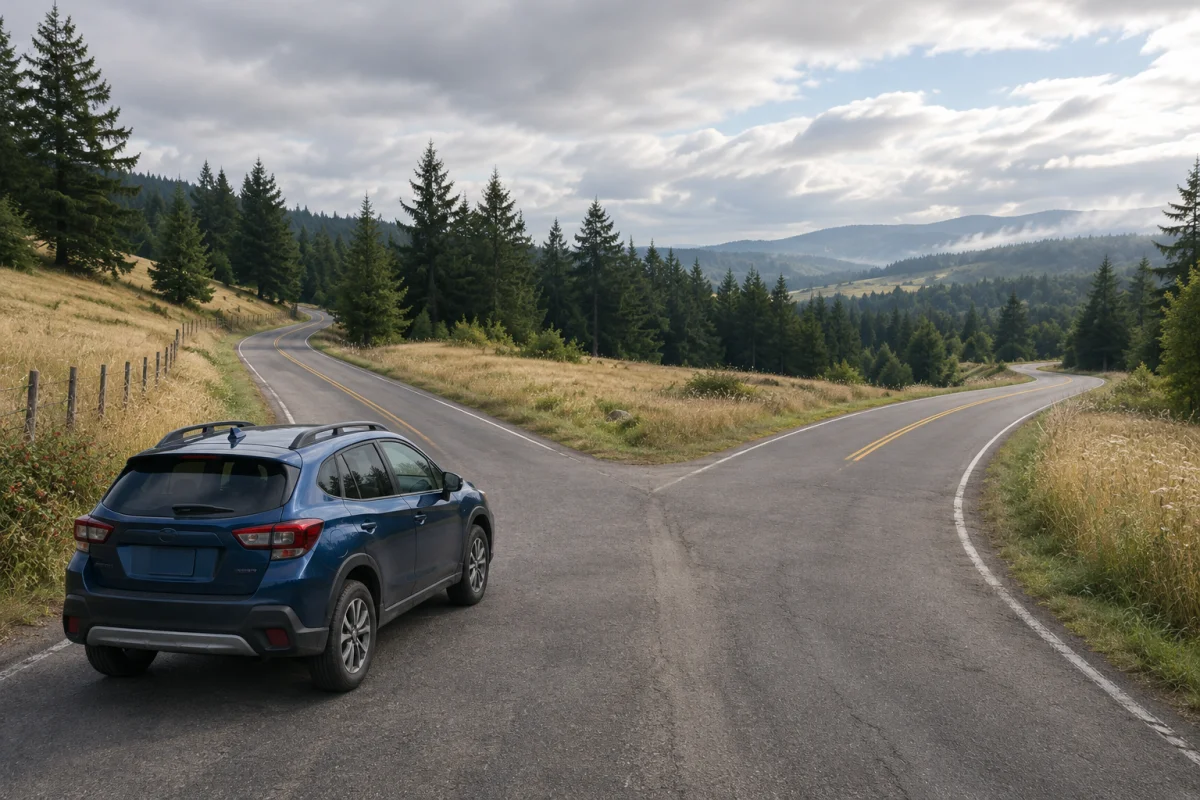
A blue crossover beside a fork in a quiet country road

Buying or leasing: which fits your life?

Buying and leasing solve different problems. Buying can lead to ownership after the loan is paid; leasing buys the right to use a vehicle for a defined time and mileage. Compare the cash you will spend during the period you expect to keep the car, along with the limits and choices attached to each path.

Read the guideClose the guide3 min read

What a lease payment covers

A lease payment generally reflects the vehicle's expected loss in value during the lease, plus a rent charge, taxes, and fees. You are paying to use the car, not paying down a loan to own it. That can make a lease payment lower than the payment to finance the same vehicle, but the monthly figure does not tell you the full cost. Compare what is due at signing, the payment schedule, fees at return, and whether the agreement gives you a purchase option.

Mileage is a major practical limit. Leases set an annual allowance, and driving beyond it can lead to additional charges. The lease can also make you responsible for excess wear, damage, or missing equipment. Before comparing offers, estimate your regular commute, errands, road trips, and likely changes over the lease period. If your mileage is unpredictable, ask how a higher allowance affects the written quote.

  • Compare total due at signing and all scheduled payments.
  • Read the mileage allowance and per-mile charge.
  • Ask how wear, damage, early termination, and return fees are handled.
  • Confirm whether buying the vehicle at lease end is an option and what the contract says it would cost.

What buying changes

When you finance a purchase, the loan has an amount borrowed, APR, and term. The payment is only one part of the comparison. Consider the down payment, total of payments, interest, taxes and fees, maintenance, and the vehicle's resale value if you might sell it. After the loan is paid, there is no monthly loan payment, although the car still costs money to insure, maintain, and operate.

Ownership gives you more freedom to drive without a lease mileage cap and to sell or keep the vehicle, subject to any lender lien until the loan is paid. It also leaves you responsible for value changes and repair costs outside any applicable warranty. A long loan term can keep payments lower but may leave a balance if you want to sell or trade earlier.

Make a like-for-like comparison

Pick a time horizon, such as the next three or four years, and compare the cash outlay over that same period. For buying, include down payment, payments, taxes and fees, insurance differences, estimated maintenance, and an estimate of what the car might be worth when sold. For leasing, include due-at-signing charges, every lease payment, insurance, expected mileage or return costs, and any disposition or purchase costs stated in the offer. Resale values and future repair needs are uncertain, so use a range rather than treating one forecast as fact.

A lease may suit a driver who values a newer vehicle on a planned cycle and can stay within its limits. Buying may suit someone who wants to keep a car longer or needs mileage flexibility. Neither label guarantees lower total cost. Get written quotes for the exact vehicle and terms, compare them line by line, and read the contract before signing. State rules and individual lease terms may affect taxes, cancellation, and end-of-lease obligations.

Keep this in mind

Compare the total cost across the same ownership period and include mileage, return conditions, end-of-term choices, and resale uncertainty.

Talk through your questions
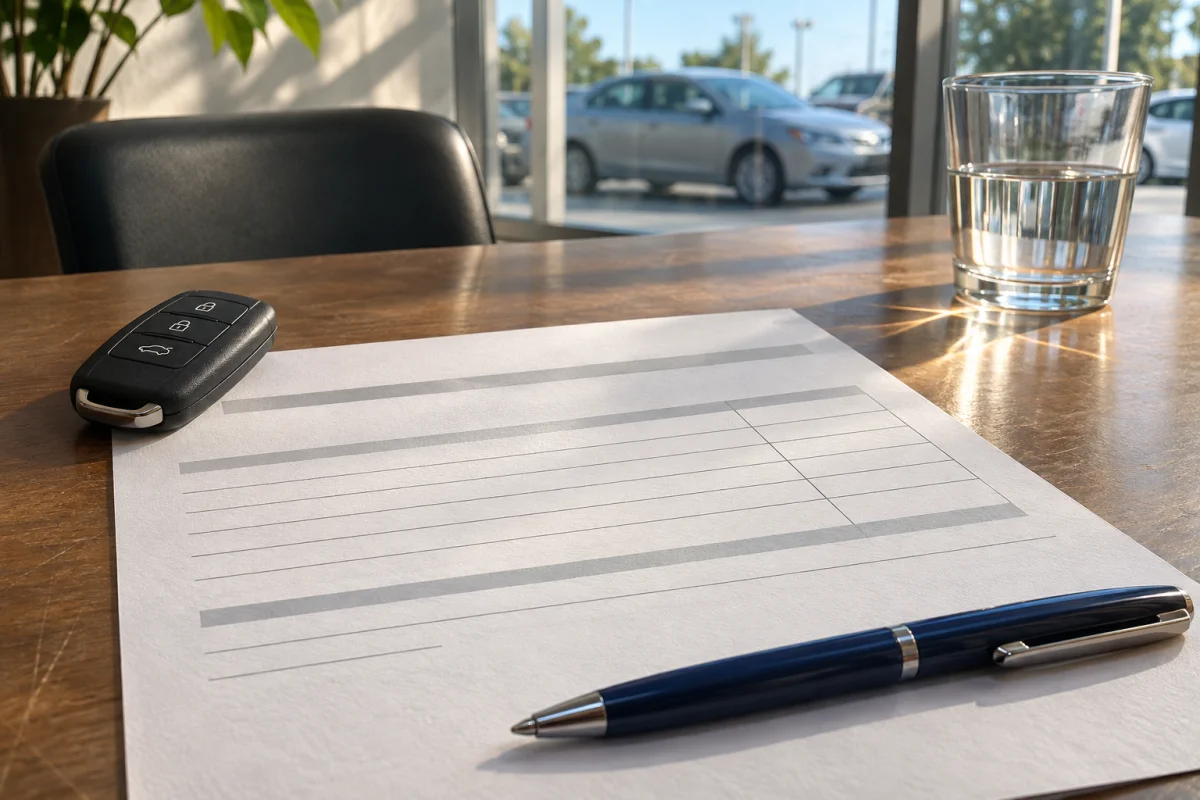
An itemized sheet, pen, and keys on a desk beside a showroom window

Ask for the out-the-door price first

A monthly payment can hide the pieces that make one car deal cost more than another. Ask each seller for an itemized out-the-door quote for the exact vehicle. A written total makes it easier to spot added products, confirm advertised discounts, and compare offers without getting pulled into a payment-only discussion.

Read the guideClose the guide3 min read

Define the quote you need

The FTC describes an out-the-door price as the total price of the car before financing, including taxes and fees. Ask for the vehicle identification number or stock number, the selling price, each dealer fee, government taxes and registration charges, and any add-on product listed separately. If a discount or rebate is included, request its name and eligibility conditions. Ask the seller to confirm that the vehicle is available and that the quote applies to the stated trim and equipment.

A practical written request can be short: “Please send the itemized out-the-door price for stock number [number], including all dealer fees, taxes, title and registration estimates, and any optional products. Please show incentives and eligibility requirements separately. I am comparing the vehicle price before financing.” That sets a clear scope without committing you to buy.

  • Vehicle selling price and any market adjustment
  • Dealer charges, each named and priced
  • Taxes, title, registration, and other government charges
  • Optional accessories or protection products, priced individually
  • Discounts or rebates and the qualifications to receive them

Keep the deal components separate

A trade-in, down payment, and financing can make the number at the bottom of a worksheet look smaller without lowering the car's price. First compare the vehicle's out-the-door price on its own. Then discuss the trade value and any loan payoff as separate lines. Finally, compare financing offers using the APR, amount financed, term, payment, and total of payments. This order helps you see where each dollar comes from.

Some government charges are set by state or local rules, while dealer charges and optional products may differ. Ask the dealer to identify which line is a government charge and how it was calculated. A fee's label alone does not tell you what it covers. If you do not understand a charge, ask for an explanation in writing before you agree. Rules and fee structures vary by state.

Use the quote at the dealership

Bring the quote and compare it against the buyer's order and final contract. Check the vehicle identifier, selling price, fees, trade allowance, payoff, cash due, and every product. If the numbers have changed, pause and ask what changed and why. A quote is useful evidence for comparison, but it is not a substitute for reading the final signed contract or checking any stated expiration and conditions.

The FTC recommends asking for written out-the-door prices before visiting, in part to check that advertised discounts are applied and identify charges introduced late in the process. An itemized quote does not guarantee the lowest market price, and no consultant can promise that result. It gives you a more reliable basis to compare similar vehicles and decide whether the complete offer works for you.

Keep this in mind

Compare itemized vehicle prices before discussing payment, trade equity, or financing, then reconcile every line with the final contract.

Talk through your questions
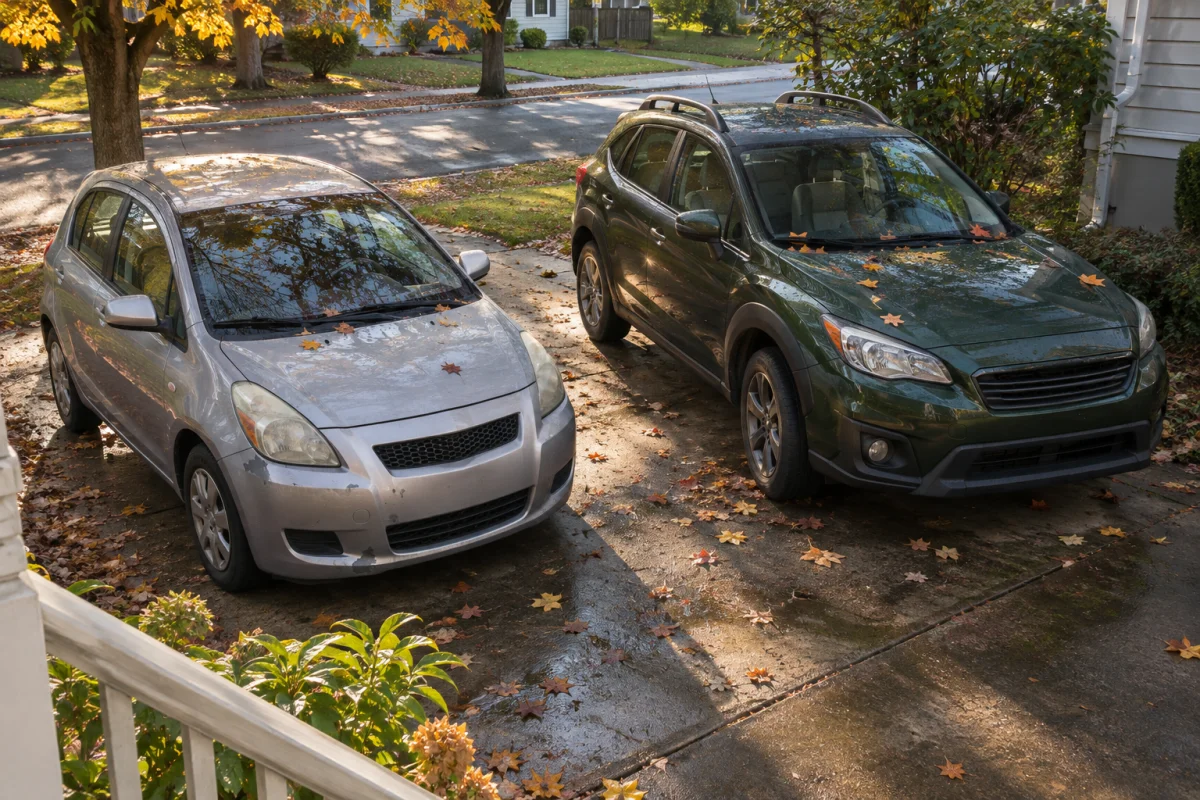
An older silver hatchback and a green crossover on a neighborhood driveway

Trading in a car you still owe money on

A trade-in has two numbers that need to be understood separately: what a buyer will credit for the car and what the current lender requires to pay off its loan. The difference is your equity position. Work it out before shopping for the replacement so an old balance does not disappear inside a new payment quote.

Read the guideClose the guide3 min read

Get a current payoff and realistic value range

Ask your lender for a payoff amount good through a stated date. It can differ from the balance printed on a statement because interest continues to accrue and fees or other charges may apply. Then estimate the car's value using several sources and condition details, including mileage, trim, damage, service records, and local comparable listings. Online estimates are starting points, not firm appraisals. Ask more than one dealer for a written offer if you want to trade it.

Suppose an illustrative payoff is $12,400 and trade offers range from $10,900 to $11,600. The difference suggests a shortfall of roughly $800 to $1,500 before any payoff-date changes or transaction details. If a trade offer is $14,000 against a $12,400 payoff, the estimated equity is $1,600. These figures are examples only. Confirm the actual payoff and final offer in writing.

  • Request the dated payoff amount and instructions from the current lender.
  • Compare trade offers for the same vehicle condition and mileage.
  • Ask how long each offer remains valid and what inspection could change it.
  • Keep the trade allowance separate from the new vehicle price.

Understand positive and negative equity

When the trade value exceeds the payoff, the difference may be credited toward your next purchase, after the old loan is fully paid. When the payoff is higher, you have negative equity. A dealer may offer to roll that shortfall into a new loan. That does not erase the debt: it increases the amount financed and can leave you owing more than the new vehicle is worth. The CFPB explains that rolling the balance can make the new loan more expensive.

Consider the full amount financed, not just a statement that a dealer will “pay off” the old loan. Ask to see the old payoff, trade allowance, any negative equity, down payment, and new loan amount on separate lines. A longer term may lower the payment while increasing total interest and keeping you in a negative-equity position longer. You can compare buying a less expensive vehicle, paying the difference separately, waiting, or selling the current car independently.

Confirm that the old loan closes

If you trade a financed car, ask which lender or dealership department will send the payoff and when. The CFPB advises checking with the old lender after the transaction to verify the prior loan was paid. Continue making any required payments until the lender confirms the account is settled; do not assume that signing the new paperwork immediately closes the old account.

Keep copies of the trade documents, payoff statement, and communications. If the payoff amount changes before closing, ask how the difference is handled and review the final contract. Trade and title processes vary by state, and the lender's payoff instructions control the amount needed to satisfy the specific loan. If the figures do not reconcile, pause and get an explanation before signing.

Keep this in mind

Calculate payoff minus trade value before negotiating the next car, and verify the old lender receives the payoff after closing.

Talk through your questions
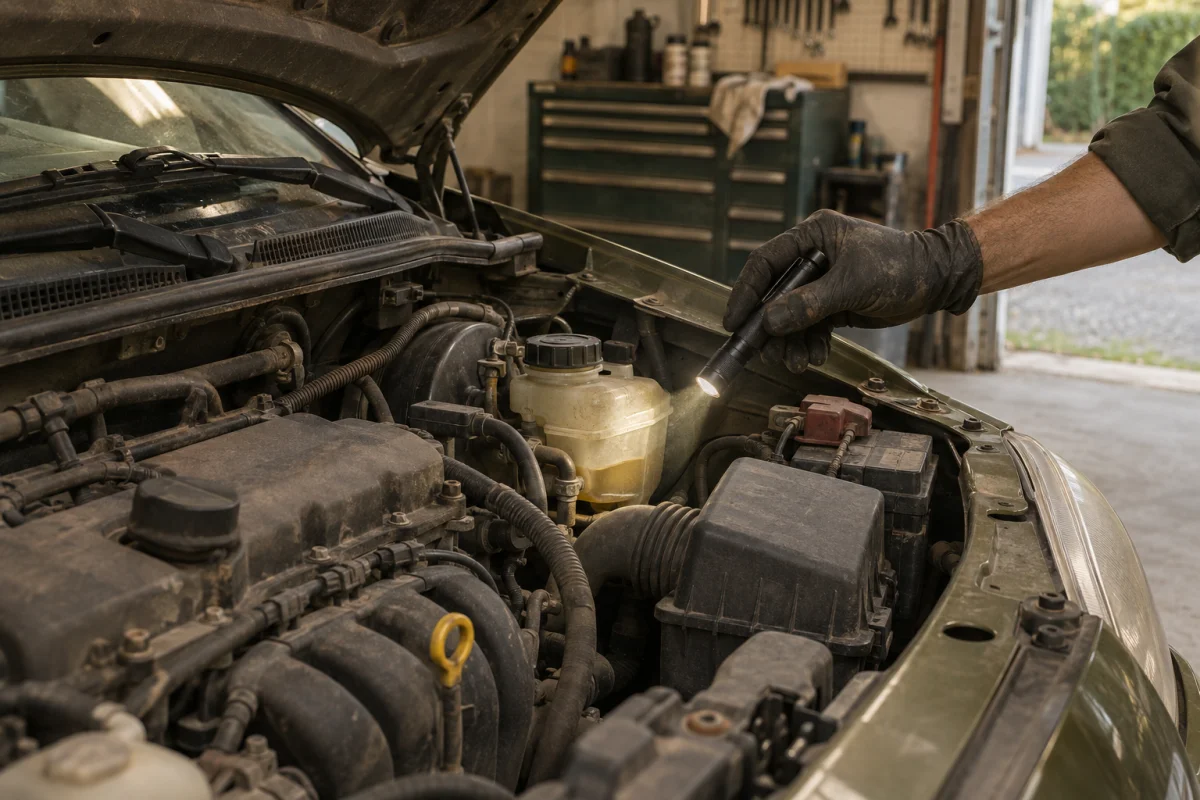
A mechanic checking a used vehicle under the hood with a flashlight

A used-car inspection is worth the extra stop

A clean-looking used car can still have a hidden mechanical issue, while a history report cannot tell you everything about its condition. Treat research as several separate checks: records, recalls, the seller’s written disclosures, and an independent inspection by a mechanic you choose.

Read the guideClose the guide3 min read

Read the vehicle history as a clue, not a verdict

Ask for the vehicle identification number and obtain a history report from a reputable provider. A report may show title events, reported accidents, ownership history, or recorded service, but information can be incomplete. The FTC says a history report is not a substitute for an independent inspection and may not include mechanical problems. Compare the report with the seller's description and ask for service invoices or other records that clarify gaps.

NHTSA’s VIN lookup does not show recalls already repaired, some recently announced recalls whose VINs have not yet been identified, or recalls more than 15 years old unless the manufacturer offers more coverage. Some small or international manufacturers and non-safety campaigns are also excluded. Check the manufacturer’s recall information for the VIN and get written confirmation of any completed repair. Recheck NHTSA because recent recall VINs are added over time.

  • Match the VIN on the vehicle, title documents, and history report.
  • Ask about gaps, title brands, accident entries, and service records.
  • Check NHTSA for unrepaired recalls, then confirm the repair with the manufacturer or dealer.
  • Read the FTC Buyers Guide for warranty or as-is disclosures.

Arrange an inspection before you commit

Choose an independent mechanic and request a written pre-purchase inspection. Ask what the inspection includes, whether the vehicle can be placed on a lift, and whether a road test is part of the service. The report should identify the vehicle and VIN, note concerns, and estimate needed repairs where possible. A safety inspection may focus on roadworthiness and can be narrower than a mechanical assessment, so clarify what service you are booking.

A dealer may have performed its own inspection or may sell the vehicle as certified. Those facts do not replace an independent review tailored to your decision. If the dealer cannot allow you to take the car to a shop, ask whether a mobile inspector can come to the location. If the seller will not permit an independent inspection, consider whether you have enough information to accept that risk or whether another vehicle is a better candidate.

Use what you learn to decide

Compare the inspection report with the asking price, warranty terms, and your repair budget. A list of upcoming maintenance is not automatically a reason to reject the car, but it belongs in the total cost. Ask the mechanic to distinguish urgent safety concerns from items that may need attention later. You can use documented repair estimates to discuss price or ask the seller to address a specific issue, but have any promise put in writing.

Review the Buyers Guide and final contract together. The FTC says the Buyers Guide states whether a dealer offers a warranty or sells the vehicle as is, and negotiated warranty changes should be reflected in the documents. State warranty and used-car rules differ, so do not assume one state's protections apply everywhere. Keep copies of the history report, inspection, guide, and signed paperwork for your records.

Keep this in mind

Use history and recall records to guide questions, then get a written independent inspection and read the Buyers Guide before signing.

Talk through your questions
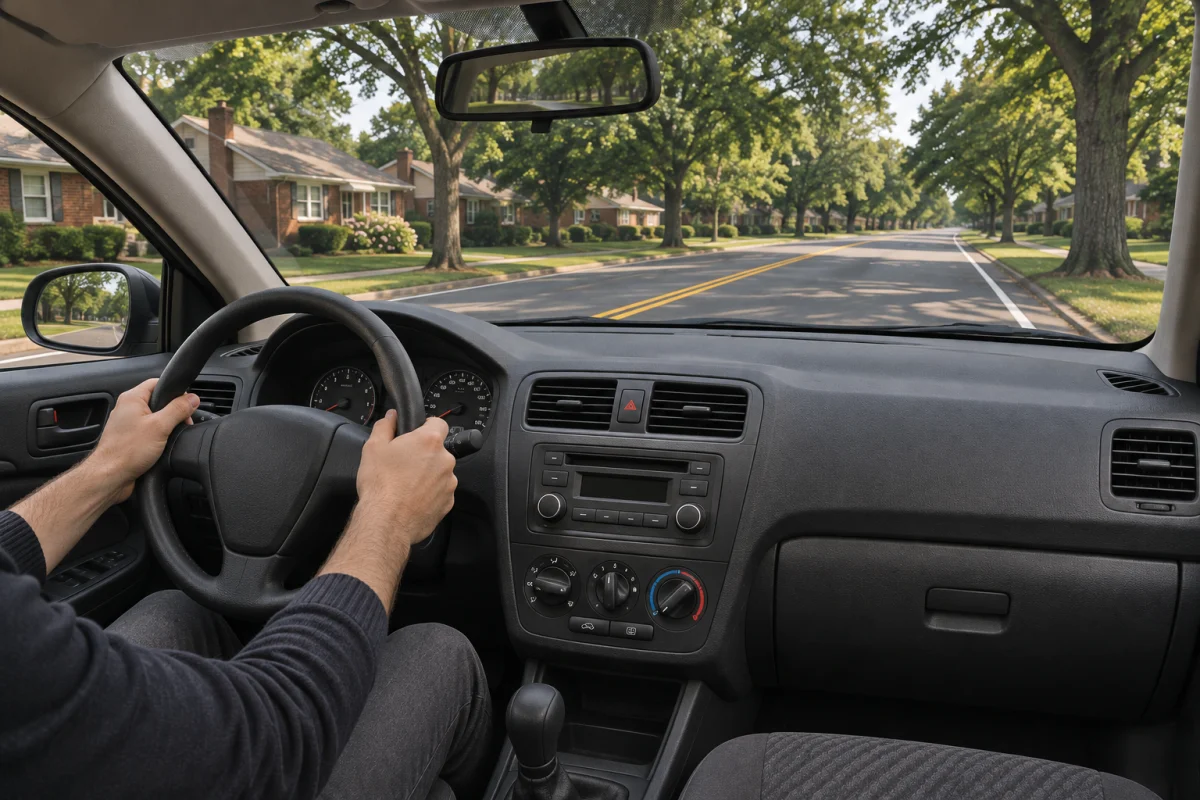
A driver on a quiet American suburban road during a test drive

Make your test drive count

A useful test drive answers a practical question: does this particular vehicle fit the way you and your household will use it? A loop around the block can reveal basic handling, but a planned route and a few fit checks can uncover details that matter every week.

Read the guideClose the guide3 min read

Set up before the car moves

Bring your driver's license and confirm the vehicle is insured and approved for a test drive under the seller's process. Before leaving, adjust the seat, steering wheel, mirrors, and head restraint. Check whether you can see the road and surrounding traffic clearly, reach the main controls without stretching, and read the displays without taking your attention from the road. Try the turn signals, lights, wipers, climate controls, parking brake, and infotainment functions while parked.

If you regularly carry passengers, a child seat, mobility equipment, or cargo, check that actual setup where the seller allows it. Sit in the rear seat, test door openings, and see whether the trunk or cargo area works for ordinary items. Bring the child seat or a representative item if permitted. A vehicle can look spacious in photos but feel different once seats are adjusted and everyday equipment is in place.

  • Can you enter and exit easily, including from the back seat?
  • Do mirrors and pillars leave blind spots you find difficult to manage?
  • Can the people and cargo you carry fit at the same time?
  • Are the controls understandable and comfortable to reach?

Choose a route that resembles normal driving

Ask for a route that includes the roads you use: a low-speed street, stop-and-go traffic, a turn or two, a rougher surface if available, and a higher-speed road where legal and safe. Check acceleration, braking feel, steering response, cabin noise, and how easily you can judge the vehicle's corners. Do not test limits or make abrupt maneuvers. Follow the seller's directions and local traffic laws.

If you park in a tight garage or use a narrow driveway, try a low-speed parking maneuver in a safe space. Assess camera and sensor visibility, but also make sure you can judge the vehicle without relying on them alone. If the car has driver assistance features, ask what each feature does and what its limits are. A salesperson's overview does not replace reading the owner's manual or safety information.

Compare drives consistently

Use the same route and checklist for each finalist when practical. Note seat comfort after more than a few minutes, visibility at intersections, noise, ride over familiar road surfaces, and whether the controls feel intuitive. Write down immediate impressions after parking. A short note such as “rear visibility limited when backing” is more useful later than a general feeling that one car was nicer.

For a used car, pay attention to warning lights, unusual noises, vibration, pulling, delayed response, or inconsistent braking, but do not diagnose a problem from a drive alone. Ask the seller about anything you notice and have a mechanic inspect concerns before purchase. A test drive cannot verify a vehicle's history or guarantee its mechanical condition. Pair it with records, a recall check, and an independent inspection where appropriate.

Keep this in mind

Use a familiar, legal route and repeatable fit checks, then record observations while they are fresh and investigate concerns before buying.

Talk through your questions
Two document folders beside reading glasses and a car key

Get a loan offer before you go car shopping

A financing offer from a bank or credit union gives you a comparison point before you discuss dealer financing. The terms “prequalified” and “preapproved” are not used identically by every lender, so ask what has been checked, whether the offer is conditional, and what could still change before final approval.

Read the guideClose the guide3 min read

Ask what the offer actually means

A lender may provide an estimate after a preliminary review or a more specific offer after reviewing an application. Ask whether it checked your credit, whether the rate and amount are conditional, which vehicles qualify, how long the offer lasts, and what documents are needed for final approval. Do not assume a prequalification guarantees a loan or locks every term. A final lender decision may depend on the vehicle, loan amount, verified information, and lender rules.

You do not need to share personal financial details with a vehicle consultant to get general help comparing written offers. Avoid sending sensitive information through an unverified form or channel. Apply directly with lenders you choose, and review their privacy and credit inquiry explanations before submitting an application.

  • APR and any separate interest rate
  • Maximum amount and eligible vehicle conditions
  • Loan term, payment, and total of payments
  • Offer expiration and conditions for final approval
  • Fees, prepayment terms, and whether the rate can change

Compare APR and loan length together

Compare offers for the same amount borrowed and a similar term. APR includes interest and certain loan fees, so it is a useful comparison measure when comparing APR with APR. A lower payment alone can result from borrowing less, choosing a longer term, or both. A longer term commonly reduces each payment but increases total interest and may keep you owing more than the vehicle's value for longer.

The CFPB recommends considering the loan amount, APR and interest rate, length, monthly payment, and total cost. Write those figures down in one place. Check whether each quote includes the same down payment, trade value, taxes, and add-ons. Otherwise, apparently different offers may be financing different amounts. A lender's maximum approval amount is not a recommended shopping budget.

Give the dealer a fair comparison

Once you have a written offer, ask the dealer to show its financing proposal in writing with APR, amount financed, term, payment, and total of payments. Compare the dealer offer against the outside lender for the same vehicle price and cash down. Manufacturer-linked financing may include a promotion for certain models or qualified buyers, so look at the exact eligibility, any rebate tradeoff, and the full contract rather than assuming one source always costs less.

The CFPB notes that shopping for rates within a focused period can help limit the effect of multiple auto-loan credit inquiries, but scoring models and lender practices can vary. Ask lenders how they handle inquiries and timing. Before signing, check the final Truth in Lending disclosures and confirm every term matches what you accepted. This is general educational information, not a personal loan recommendation; only the lender can confirm an offer for your circumstances.

Keep this in mind

Bring a written financing comparison, ask what is conditional, and compare APR, amount financed, term, and total payments on the same basis.

Talk through your questions
Two friends looking at a compact car outside an apartment building

Your first car, without the guesswork

Your first car purchase does not need to happen in one afternoon. Break it into a few decisions: what the car needs to do, what the complete monthly cost can be, which vehicles fit, and how you will compare the written offers. A sequence reduces the pressure to decide before you have enough information.

Read the guideClose the guide2 min read

Start with use and budget

Write down the jobs your car must handle: commute length, passenger count, cargo, weather, parking, and occasional trips. Separate essentials from preferences. A smaller set of needs helps you compare vehicles that solve the same problem rather than getting distracted by features that add cost but little value to your routine.

Build a budget for the full ownership cost. Include a possible loan payment, insurance, fuel or charging, registration, parking, maintenance, tires, and a repair cushion. Get an insurance estimate for vehicles you are seriously considering. Decide how much cash you can use without undermining other priorities, and keep taxes and fees in mind. A lender's approval does not define a comfortable budget.

  • Choose a firm maximum for the total vehicle price and monthly ownership cost.
  • Ask an insurer for quotes on specific vehicles before committing.
  • Research a few models and trims that meet your actual needs.
  • For used cars, budget for an independent inspection and near-term maintenance.

Research and compare without rushing

Keep a simple comparison sheet for two or three finalists. Record the exact VIN, written out-the-door price, insurance estimate, inspection findings, and financing terms for each. Add a column for unanswered questions and another for anything that would make you walk away. Details from several cars and offers can blur together after a few visits.

Work through one candidate at a time: confirm that the car is available, inspect and drive that specific vehicle, then resolve open questions before signing. For a used car, make the independent inspection part of the decision. If the price or terms change, update your comparison. You can leave and return later; a first visit does not obligate you to decide.

Take time with the final paperwork

Before signing, compare the final buyer's order and financing contract with the quote you accepted. Confirm the VIN, price, taxes and fees, cash due, trade details if any, APR, term, payment, and total payments. Read every add-on line and say clearly if you do not want an optional product. Ask for an explanation of unfamiliar terms. If an important promise is not written into the contract or related documents, do not rely on a verbal summary.

Confirm whether financing is final before leaving with the vehicle, and ask what happens if a lender has not completed approval. Make sure you understand insurance, registration, title, and payment responsibilities. State rules and paperwork differ. Keep copies of signed documents, inspection records, service details, and contact information. A sound first purchase is one you can explain afterward: why the vehicle fits, what it costs, and what obligations you accepted.

Keep this in mind

Move from needs to budget to written comparisons, and give yourself time to understand every line before signing.

Talk through your questions
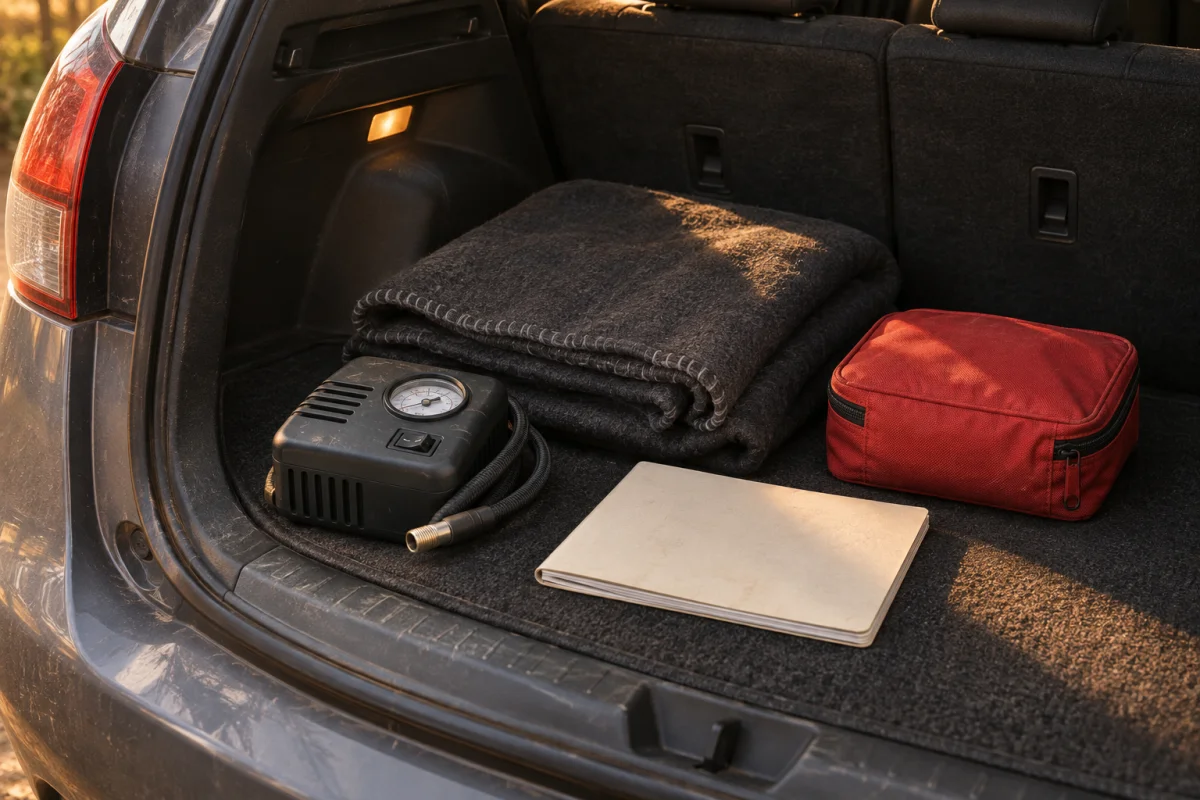
Roadside supplies and a service booklet in a vehicle cargo area

Which extras are worth a second look?

Optional products often appear near the end of a long purchase process, when it is harder to compare calmly. Pause and identify each product, its price, what it covers, and whether you can buy it later. A service contract, a manufacturer warranty, and GAP coverage solve different problems and should not be treated as interchangeable.

Read the guideClose the guide3 min read

Separate the product types

A manufacturer's warranty is included with many new vehicles and covers specified defects for stated time or mileage limits. An auto service contract is purchased separately and may pay for certain repairs or services under its written terms. The phrase “extended warranty” is often used for a service contract, but it is not the same as the original warranty. Compare overlap, start date, covered parts, exclusions, deductible, repair location, claim process, transferability, cancellation, and refund terms.

GAP coverage addresses a different potential loss. It may cover some difference between an auto loan balance and what an insurer pays after a covered total loss or theft, subject to the product's terms and exclusions. It does not pay for ordinary repairs or automatically eliminate every amount owed. The CFPB says GAP is optional and consumers who want it can shop around. Compare the product cost and terms with any coverage already available through your insurer or lender.

  • Ask for the contract or coverage document before deciding.
  • Get the price for each product on its own, including the financed cost.
  • Check exclusions, deductibles, claim steps, cancellation, and refund rules.
  • Confirm the product is listed only if you agreed to buy it.

Evaluate add-ons against your needs

Other add-ons may include paint or fabric treatments, theft marking, tire or wheel coverage, maintenance plans, or credit-related products. Ask what event triggers a benefit, who provides it, where service is available, and whether the same protection is already included in the vehicle or another policy. Ask whether you can purchase it later and compare prices from independent providers where practical.

If an add-on is financed, its price increases the amount borrowed and may increase total interest as well as the monthly payment. A product that seems inexpensive as a small payment can cost more over a long loan. Review the purchase price in dollars, not only the change to the monthly figure. You can decline optional products, and an item should not be included without your agreement.

Review the contract before signing

Ask the seller to show every product on the buyer's order and financing paperwork. Compare the contract with your written quote and remove anything you did not choose. Do not sign on a screen if you cannot see what is being signed; request a readable copy of the full terms. If you are unsure, ask to take time to review the documents. Do not let a discussion about optional coverage obscure the car price or loan terms.

Consumer protections and warranty rules can depend on the state, the seller, and the exact contract. The FTC explains that a service contract is distinct from a warranty and offers questions to ask before buying one. Keep the signed agreement and confirmation of any cancellation process. This is general information, not a recommendation to purchase or decline a particular product.

Keep this in mind

Name each product, read its written coverage and limits, compare its total cost, and confirm the final paperwork matches your choices.

Talk through your questions
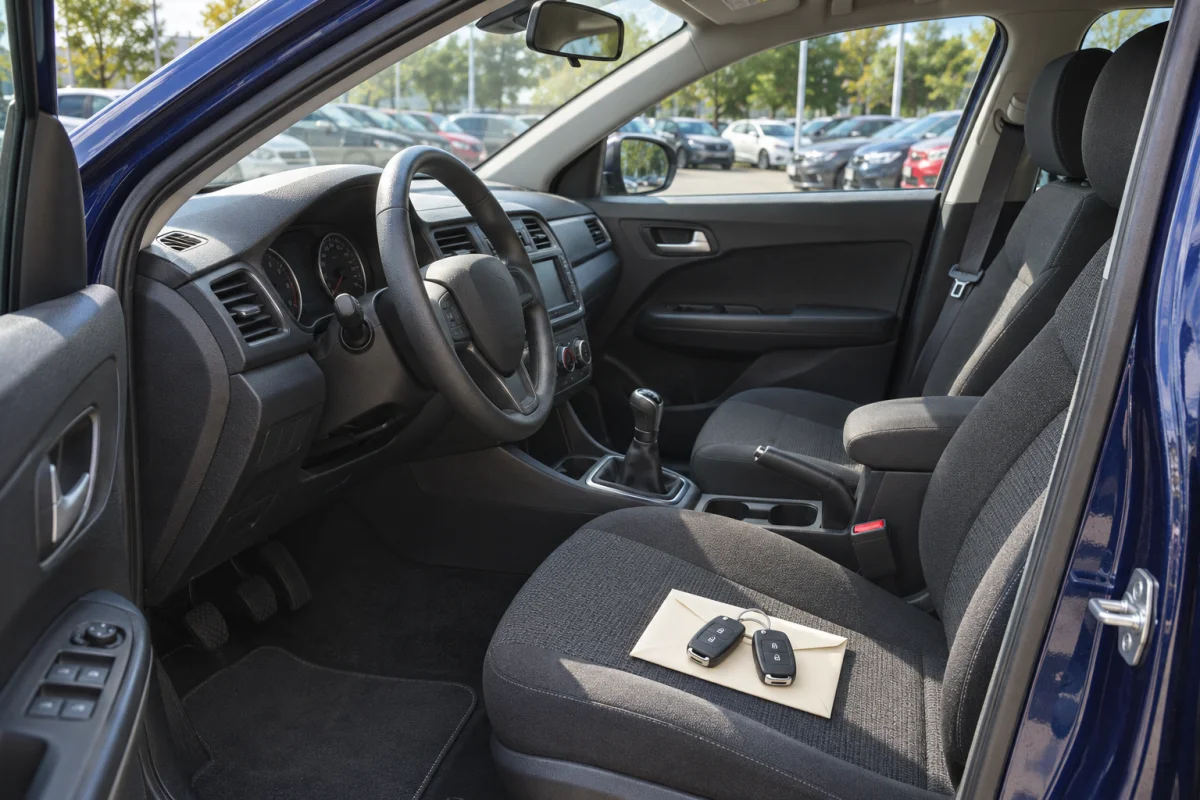
Two keys and an envelope in a clean vehicle interior

Before you drive away on delivery day

Taking delivery is the last chance to compare the vehicle and documents with the deal you agreed to while the seller is present. Give yourself enough time to inspect the car, confirm included equipment, and leave with readable copies of every signed document and a clear contact for unresolved items.

Read the guideClose the guide3 min read

Match the vehicle to the agreement

Check the VIN on the vehicle against the buyer's order, title or registration paperwork, and any warranty documents. Walk around the exterior in good light and note any damage, missing trim, or condition differences from what you agreed to buy. Check the interior, odometer, warning lights, tires, keys, manuals, and any accessories or equipment promised in writing. For a used vehicle, confirm that the seller has provided the Buyers Guide and the final warranty or as-is paperwork.

Ask the seller to demonstrate unfamiliar features and how to access the owner's manual, spare tire or repair kit, charging cable if included, and roadside assistance information if offered. If a repair, accessory, or other promise is still outstanding, get the exact item, responsible party, and expected next step in writing. Do not treat a verbal note as a substitute for documented terms.

  • Confirm the VIN, mileage, color, trim, and included equipment.
  • Photograph condition concerns before leaving and share them with the seller.
  • Check that all keys, manuals, and promised accessories are present.
  • Ask how to reach the sales and service contacts after delivery.

Read the final paperwork line by line

Review the signed buyer's order, financing contract, warranty documents, and any optional product agreements. Confirm the vehicle price, taxes and fees, down payment, trade allowance and payoff, amount financed, APR, term, payment schedule, and total of payments. Make sure every add-on matches what you agreed to buy. The contract controls the obligations, so pause if a number or term differs from the quote or an explanation is unclear.

Ask whether financing is final before leaving. If approval is still pending, ask what remains and consider waiting to take the car home. If you are later called back to sign different terms, compare every change before agreeing. If you decline the new deal, ask for your down payment and trade-in back and get written confirmation of any cancellation. Keep your documents and confirm the financing status with the lender. The contract and applicable state rules matter if there is a dispute.

Keep records and follow through

Leave with copies of all signed documents, proof of payment, warranty or service contract, registration instructions, and the seller's contact details. Save the documents together so you can find a payoff contact, cancellation provision, or claim process later. Check with your insurer that coverage is active for the vehicle and confirm any state registration or inspection steps that remain your responsibility.

If a trade-in loan was part of the deal, contact the old lender after the transaction to confirm the payoff was received. Follow the new lender's payment instructions and due date, even if a welcome statement has not arrived. If a promised item or paperwork has not arrived, contact the named person in writing and keep a copy. Procedures and deadlines vary by state and contract, so use your documents and the relevant state agency for local requirements.

Keep this in mind

Before driving away, reconcile the vehicle and final documents with the agreed terms, collect copies, and make a written follow-up list.

Talk through your questions

Let’s make it
personal.

A guide can explain the choices. A conversation can help connect them to your next car.

Talk with Chris

Your delivery
deserves a photo.

Send your favorite moment to Chris. It won’t appear on the website automatically.