What can I comfortably spend on a car?
A comfortable car budget begins with the money the car will use every month, not the payment a salesperson can make fit on a worksheet. Start with the whole cost of owning the vehicle, then decide what purchase price and financing leave room for the rest of your life.
Read the guideClose the guide3 min read
Count the costs around the payment
A car can bring several recurring and occasional costs: loan or lease payment, insurance, fuel or electricity, registration, parking, maintenance, tires, and repairs. Some costs arrive monthly; others show up once or twice a year. Convert the irregular ones into monthly planning amounts so they do not feel like surprises. Ask your insurer for an estimate on the specific year, make, model, and trim you are considering. Insurance can vary substantially between vehicles, and an online estimate is not a binding quote.
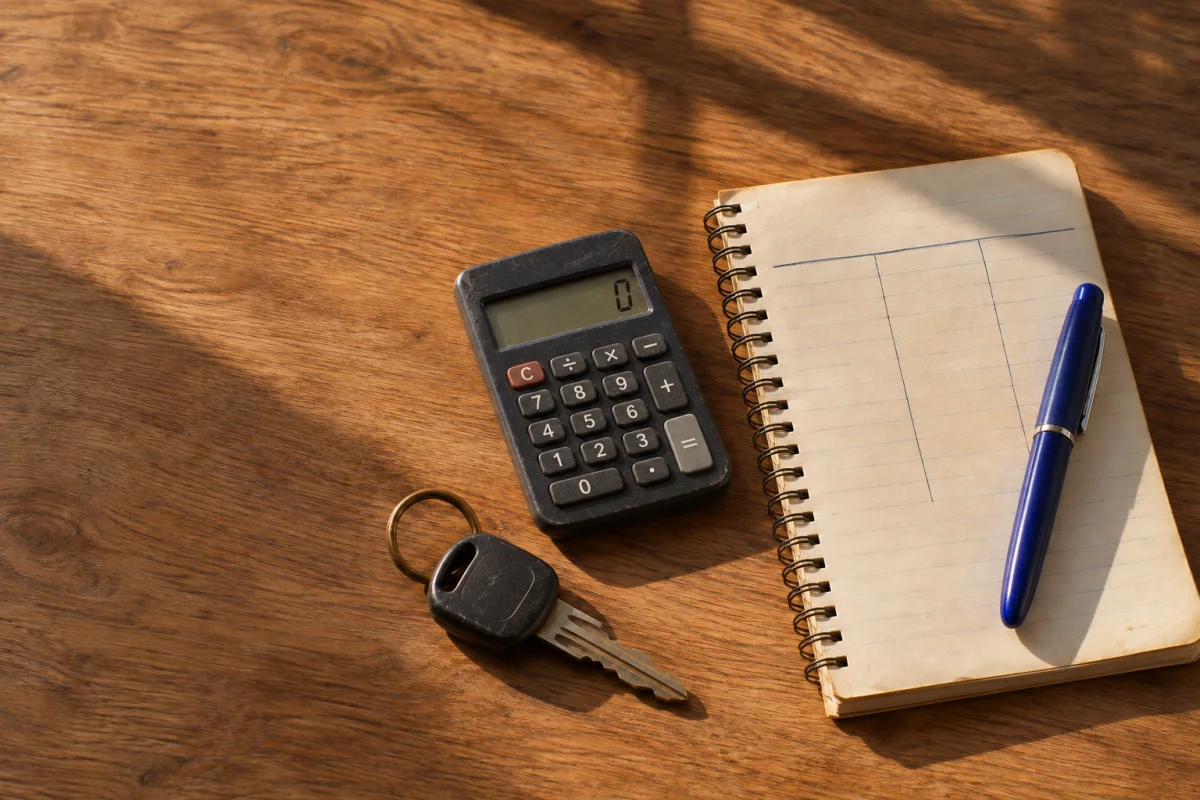
For example, suppose an illustrative household expects a $340 monthly loan payment, $145 for insurance, $110 for fuel, and sets aside $90 for maintenance and registration. The practical monthly commitment is about $685, before parking or unexpected repairs. Those numbers are only an example. Substitute real quotes, your driving pattern, and local fees. If the full amount makes the budget tight, the vehicle price or financing plan needs another look.
- Ask an insurer for a quote before choosing the vehicle.
- Estimate fuel or charging from your normal weekly miles.
- Include registration, parking, routine service, tires, and a repair cushion.
- Keep room for savings and other goals instead of spending every available dollar.
Work backward to a purchase price
Choose a monthly ownership amount that fits after rent or mortgage, utilities, food, debt payments, savings, and other needs. Subtract estimated insurance, energy, maintenance, and local ownership costs. The remainder is the maximum you could devote to financing, not necessarily what you should spend. A lender's approval amount answers whether it may lend; it does not decide whether the payment is comfortable for your household.
Next, account for cash due at purchase, such as a down payment, taxes, title, registration, and dealer charges. Ask for the total price in writing and check what the down payment actually changes. A larger down payment can reduce the amount borrowed, but do not empty an emergency fund just to make a deal look smaller. If you have a trade-in with a loan, calculate the payoff and trade value separately before counting any equity as a down payment.
Compare financing by total cost
The same vehicle price can produce very different total borrowing costs. Compare the annual percentage rate, amount financed, loan length, monthly payment, and total of payments. A longer term usually lowers the monthly payment while increasing the time interest accrues and the chance that you owe more than the car is worth. Look at a term that you can afford without stretching the loan only to reach a target payment.
The CFPB also recommends including ownership costs such as insurance, fuel, registration, maintenance, and repairs when evaluating what you can afford. Its auto loan tools can help you lay out assumptions and compare offers. Treat estimates as planning tools, then use the actual written quote and contract terms before signing. Taxes, fees, insurance prices, loan availability, and consumer protections vary by state and lender.
Keep this in mind
Set a whole-car monthly budget first, then use real insurance and ownership estimates to find a purchase price and loan that leave breathing room.
Sources: CFPB: How do I compare auto loan offers?, CFPB: Auto loan tools and answers, FTC: Buying a used car from a dealer
Talk through your questions